




- By: admin
- Comments (0)
- May 22
Wedding in Burj Al Arab: The Ultimate Guide to Planning a Super Luxury Indian Wedding in Dubai
What makes a wedding in Burj Al Arab different from any other luxury Dubai wedding?
A wedding in Burj Al Arab is not simply a venue booking — it is an end-to-end curated experience. The hotel sits on its own man-made island, 280 metres offshore, and every element from your arrival by Rolls-Royce or helicopter to the gold-leaf interiors of the Al Falak Ballroom is designed to signal that this is not an ordinary celebration. For Indian couples seeking a wedding that telegraphs prestige to every guest, there is no venue in Dubai — or arguably the world — that competes on pure iconography.
Is Burj Al Arab suitable for Indian weddings, including multi-day celebrations?
Yes, and this is something our team at Blissful Plans has navigated across dozens of Indian luxury weddings in Dubai. Burj Al Arab accommodates multi-event formats — a Mehendi and Sangeet can be hosted in the Marina Garden or the Skyview spaces on the 27th floor, while the Al Falak Ballroom is ideal for the main reception. The hotel’s culinary team is experienced in crafting bespoke Indian menus and allows private catering coordination for specialised dishes, which is essential for families with specific regional cuisine requirements.
How many guests can a wedding in Burj Al Arab accommodate?
The venue scales from ultra-intimate to grand. The helipad ceremony accommodates up to 8 guests and sits 212 metres above the Arabian Gulf. The Skyview rooms on the 27th floor can host up to 60 guests. The Marina Garden seats approximately 100–150 guests for outdoor events. The Al Falak Ballroom, modelled on a Viennese opera house, holds up to 250 guests seated or 300 for a standing reception, large enough for a traditional Indian baraat welcome and a full-scale reception dinner.
What does a wedding in Burj Al Arab cost?
Pricing is bespoke by design. Marina Garden weddings start from around AED 80,000. The Al Falak Ballroom for an exclusive reception starts from AED 250,000 and above. The iconic helipad ceremony, 212 metres above the Gulf, starts from AED 200,000 for the ceremony experience alone. Per-guest dining packages begin at approximately AED 310 per person, rising significantly for premium menus and beverage packages. For an Indian wedding spanning multiple events and guest blocks, total investment typically ranges from AED 500,000 to over AED 2 million depending on scale, season, and customisation.
When is the best time to have a wedding in Burj Al Arab?
The October to April window is peak wedding season in Dubai. Temperatures are cooler, making outdoor ceremonies in the Marina Garden genuinely beautiful. This is also when demand is highest, so couples planning a Burj Al Arab wedding should engage a professional wedding planner and begin coordination at least 9 to 12 months in advance. Our team at Blissful Plans recommends that Indian families securing multiple event days book even further ahead to lock preferred dates across all functions.
Can non-Muslim couples have a legally binding wedding ceremony at Burj Al Arab?
Dubai allows non-Muslim expatriates and foreign nationals to hold civil weddings. However, legal requirements for foreign nationals conducting a civil marriage ceremony in Dubai must be reviewed in accordance with current UAE law. We recommend consulting the UAE Government’s official information on marriage and legal documentation for expatriates before making any assumptions about legal validity. Most Indian couples opt for a symbolic ceremony at the venue and complete their legal registration in India separately — a common and practical approach our team has facilitated many times.
Why Indian Families Choose Burj Al Arab Weddings: A Planner’s Perspective
At Blissful Plans, we have spent years planning super-luxury Indian weddings across Dubai’s most iconic properties.
When Indian families approach us for a Dubai wedding, the Burj Al Arab comes up in conversation almost every time. Not always as the chosen venue, but always as the benchmark.
Here is what we have observed, planning Indian weddings at this level.
The status signal is unmatched. Indian weddings carry deep social significance, and the venue speaks before the first guest arrives. The Burj Al Arab’s sail-shaped silhouette is among the most recognised architectural images in the world. When wedding invitations say “Burj Al Arab, Dubai,” the message is understood instantly across every community and every generation. No other venue in Dubai achieves this.
The all-suite structure works beautifully for Indian wedding guests. All 202 accommodations at Burj Al Arab are duplex suites, ranging from 170 to 780 square metres. For Indian families hosting close relatives and VIP guests, this means every guest is in a suite, there are no inferior room categories. This matters deeply in Indian wedding hospitality culture, where the comfort and perceived prestige of guests is a reflection of the family’s respect for them.
The multi-day format is manageable with the right planner. A traditional Indian wedding typically involves a Mehendi, Haldi, Sangeet, Nikah or Pheras, and a Reception — sometimes across three to four days. Burj Al Arab’s multiple event spaces allow for this spread. The Marina Garden suits the lighter daytime events beautifully; the Al Falak Ballroom is the natural home for the main reception evening. The Skyview suites on the 27th floor work well for intimate family gatherings or pre-wedding cocktail evenings.
The hotel’s culinary team can work with Indian requirements. One of the most common concerns we hear from Indian families is food — specifically, whether a luxury Western hotel can genuinely deliver Indian cuisine at the standard guests expect. Burj Al Arab’s kitchen team works with event planners to customise menus, and the hotel permits coordination with specialist Indian caterers for specific elements. Our team at Blissful Plans manages this liaison directly, ensuring authenticity is never compromised for spectacle.
Dubai’s legal and logistical infrastructure makes it practical. Beyond the venue itself, Dubai is genuinely easy for Indian families to reach. Direct flights from Mumbai, Delhi, Bengaluru, and Hyderabad connect in under four hours. Dubai’s visa-on-arrival and e-visa system for Indian passport holders has simplified group travel considerably. The city’s safety record, English-language infrastructure, and luxury retail environment make it a comfortable destination for guests of all ages.
The Wedding Venues Inside Burj Al Arab: What Each Space Offers
The Helipad — 212 Metres Above the Arabian Gulf
Weddings in the sky are not a metaphor at Burj Al Arab. The hotel’s world-famous helipad sits 212 metres above sea level, perched at the very apex of the building. The Dubai skyline, the Arabian Gulf and the Palm Jumeirah are visible in every direction. For couples who want a ceremony moment that is genuinely unlike anything else in the world — for photographs, for drone footage, for the sheer audacity of the moment — the helipad delivers.
It is limited to approximately 8 guests, which makes it unsuitable as the sole ceremony space for a large Indian wedding. However, the helipad is great for the couple’s private vow exchange or first look, while the main celebration takes place in the ballroom. This two-tier approach works beautifully and produces extraordinary imagery.
Al Falak Ballroom — The Grand Reception Space
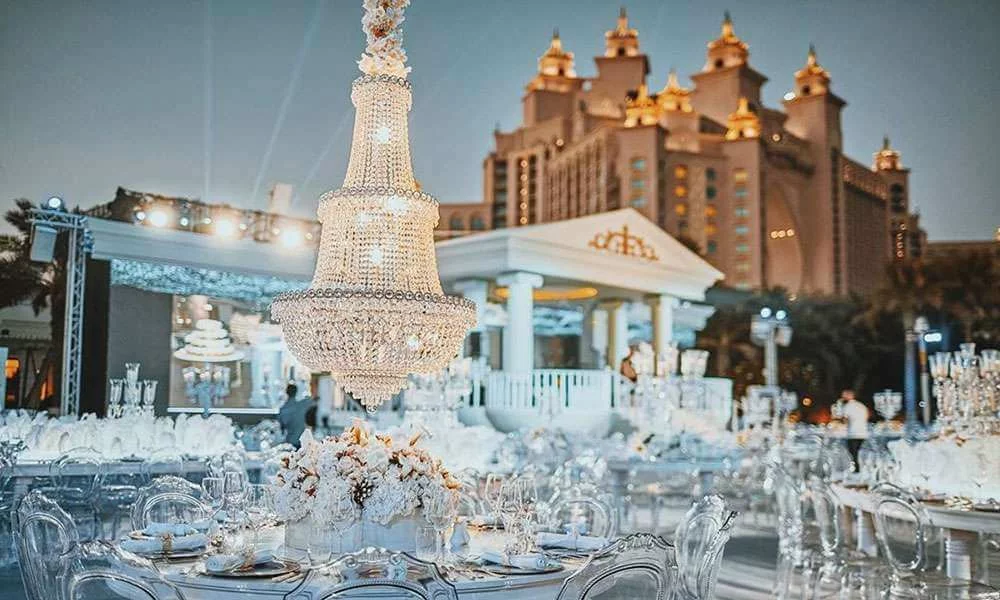
The Al Falak Ballroom is where weddings at Burj Al Arab reach their full scale. Modelled on an 18th-century Viennese opera house, the space features a domed ceiling, crystal chandeliers and sweeping staircases that were almost designed for a baraat entrance. It seats 250 guests comfortably and holds 300 for a standing reception.
For Indian receptions, the room’s theatrical architecture translates beautifully. The scale accommodates a stage for the couple, a dance floor, live music — whether a Bollywood act, a classical ghazal singer, or a full band — and the kind of floral and lighting design that Indian wedding aesthetics demand.
Marina Garden — The Outdoor Coastal Ceremony Space
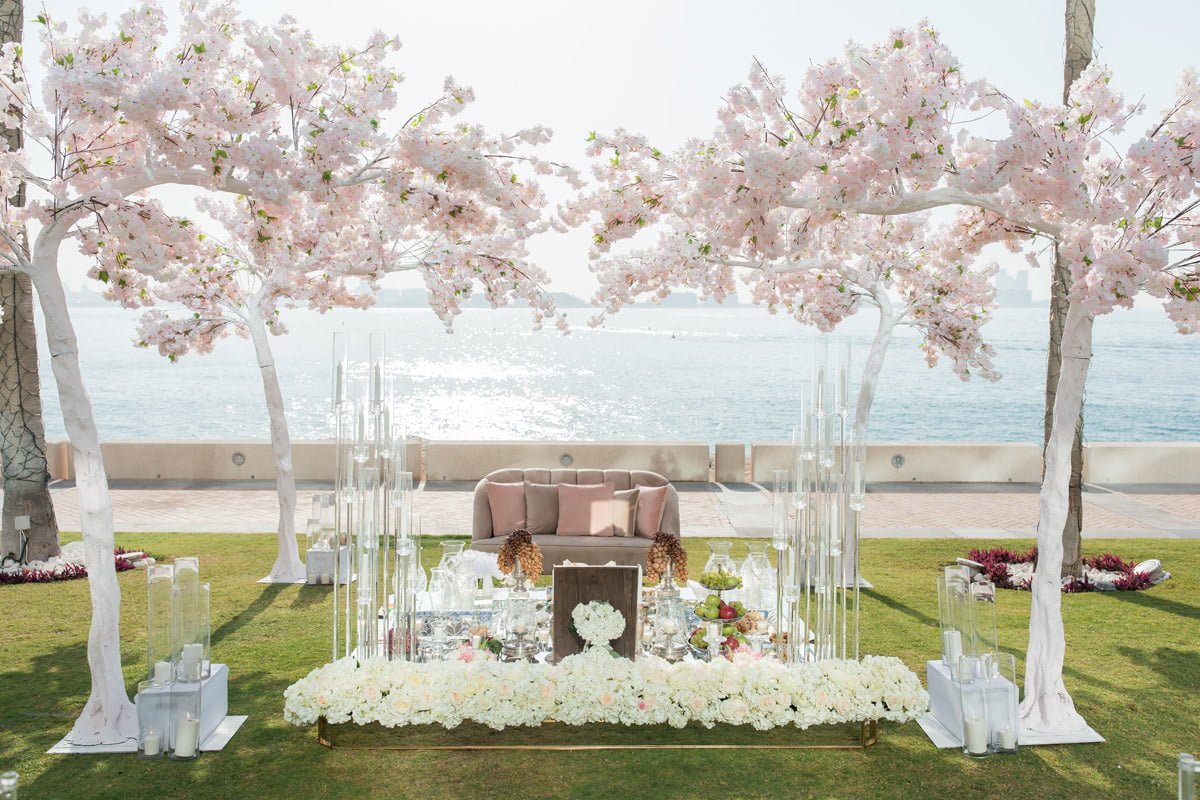
The Marina Garden is set against the Arabian Gulf, surrounded by manicured palms and with the Burj Al Arab’s sail silhouette rising behind it. It seats 100–150 guests and is at its most spectacular during the October to April season when Dubai’s evenings are warm and clear.
For Indian weddings, the Marina Garden is ideally suited to Mehendi evenings, Sangeet nights or outdoor cocktail receptions. The open-air setting allows for more relaxed staging, fire performers, live dhol players and the kind of high-energy programming that makes Indian pre-wedding events memorable. Sunset timing for the Sangeet, with the Gulf as your backdrop, produces wedding photography that is genuinely rare.
Skyview Rooms — Intimate Events on the 27th Floor
Perched on the 27th floor, the Suha and Tameen rooms offer sweeping views of Dubai’s skyline and coastline in an intimate setting of up to 60 guests. For Indian families, these spaces work well for a small family-only Pheras, a private welcome dinner for closest relatives, or a bridal morning gathering before the main ceremony.
Saying ‘I Do’ at the Icon: Cost of a Wedding in Burj Al Arab
When it comes to ultra-luxury destination weddings, few landmarks carry the sheer prestige, absolute exclusivity, and jaw-dropping price tag of Dubai’s sail-shaped icon: the Burj Al Arab Jumeirah.
Operating entirely on a suite-only inventory with strictly managed public access, this world-renowned seven-star marvel doesn’t offer your standard, off-the-shelf wedding packages. A wedding here is entirely bespoke—designed less like a traditional hotel reception and more like a high-production, custom theatrical showcase.
The Cost Breakdown: Baseline Commitments
While final budgets fluctuate wildly based on your choice of floral designers, custom entertainment, and seasonal demand, planning an elite celebration at the Burj Al Arab requires meeting very specific financial baselines:
| Expense Category | Estimated Pricing (AED) | Estimated Pricing (USD) | What’s Included / Notes |
| Food & Beverage (Per Person) | AED 400 – AED 850+ | $110 – $230+ | Base menu and soft drinks only; excludes premium alcohol and service charges. |
| Minimum Event Spend | AED 100,000 – AED 150,000 | $27,000 – $41,000 | The absolute minimum baseline venue commitment per function. |
| The Signature Helipad Ceremony | AED 200,000+ | $55,000+ | Starting rental fee just to secure the sky space for vows. |
| Average Total Wedding Budget | AED 1.5M – AED 2.5M+ | $400,000 – $680,000+ (can go up to $1 Mn depending on requirements) | All-inclusive estimate for 100–150 guests (including stay, production and decor). |
Uniquely Indian Considerations for a Burj Al Arab Wedding
Most guides to weddings at Burj Al Arab are written for a Western destination-wedding audience. Here is what matters specifically for Indian families, drawn from our experience at Blissful Plans.
Pandit and religious officiant coordination. Burj Al Arab does not have in-house Hindu, Sikh, or Muslim ceremony officiants familiar with Indian rituals. This needs to be arranged externally. Our team at Blissful Plans maintains a network of experienced Pandits and ceremony coordinators who are comfortable working in Dubai’s luxury hotel environment and who understand the spatial and timing requirements of a full Vedic ceremony.
Sapta Padi and the pheras space. The traditional seven steps around the sacred fire (sapta padi) require a clear, elevated and symbolically appropriate space. The Al Falak Ballroom can be configured for this, but it requires thoughtful staging, smoke management permissions (for the sacred fire or alternative havan setup) and a planner who has navigated this before.
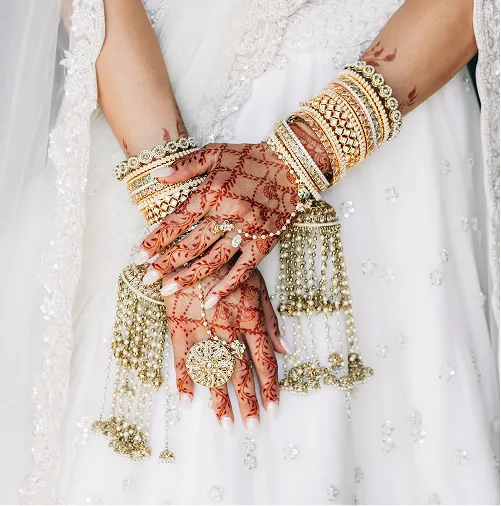
Bridal suite access and getting-ready logistics. Indian brides typically require extensive getting-ready time — professional saree draping, bridal lehenga fittings, mehendi touch-ups and a full team of hair and makeup artists working in sequence. Burj Al Arab’s duplex suites are spacious enough to accommodate this, but the logistics need to be planned precisely. We recommend booking the bridal suite for a minimum of two nights to allow comfortable preparation across the wedding day morning.
Guest block accommodations. For larger Indian families, we often recommend combining a Burj Al Arab guest block with overflow accommodation at a nearby property such as Jumeirah Beach Hotel, which is connected to the Burj Al Arab complex and offers excellent value for extended family groups while maintaining proximity for all functions.
Indian catering and alcohol considerations. Some Indian families prefer a dry wedding, or a wedding where alcohol service is managed very selectively. Others require premium open bars for an international guest list. Burj Al Arab holds a full alcohol licence and can accommodate both formats. Families with specific dietary requirements — pure vegetarian, Jain vegetarian, or halal certification needs — should discuss these explicitly with the hotel’s culinary team via their planner at the time of contract negotiation.
The importance of a local Dubai planner with Indian wedding experience. Burj Al Arab’s in-house wedding team is world-class at what they do. However, their expertise is primarily in Western and Pan-Asian celebration formats. An Indian wedding — with its multi-day structure, large vendor ecosystem (decorators, dhol players, baraat logistics, Indian caterers) and family dynamics — requires a planner who bridges both worlds. This is specifically what the team at Blissful Plans does and why we are the recommended partner for Indian families planning this wedding.
The Burj Al Arab Wedding Experience: Day by Day: A Planner’s Suggestion
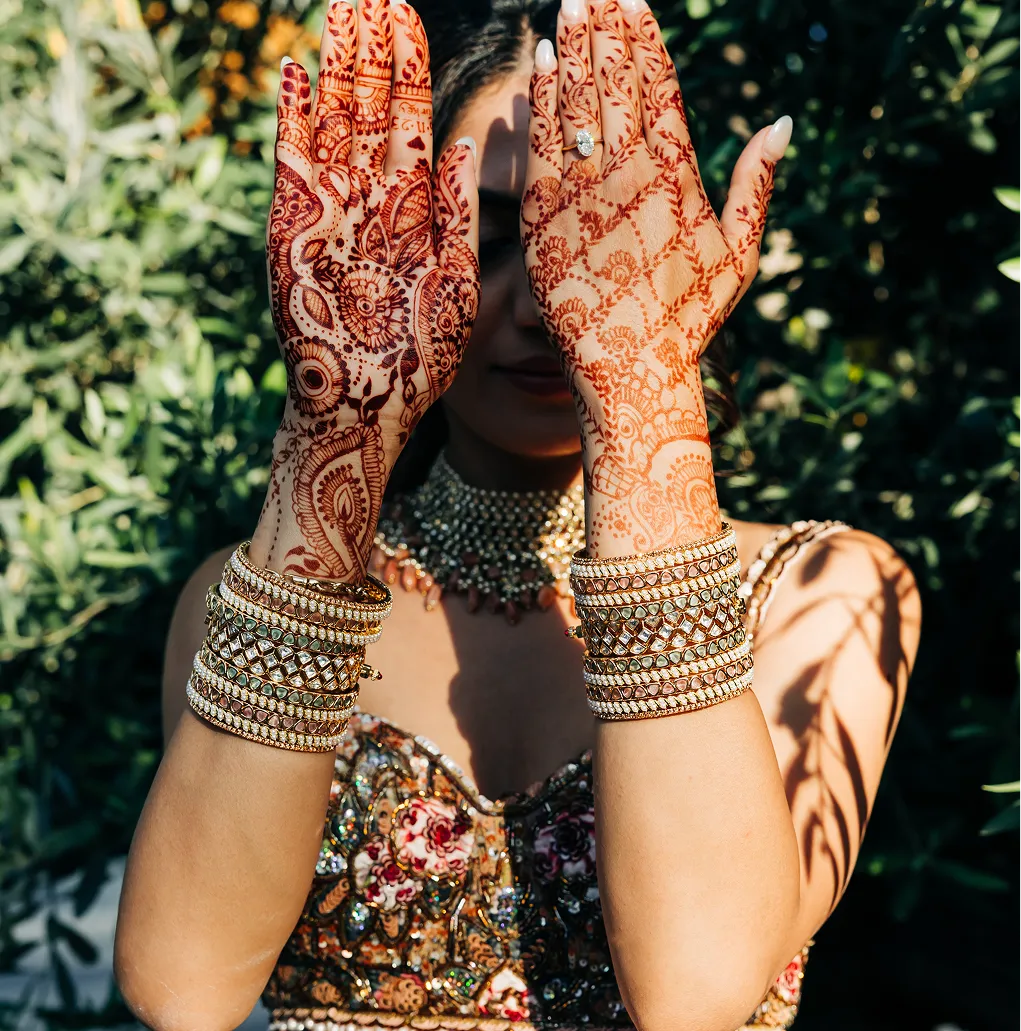
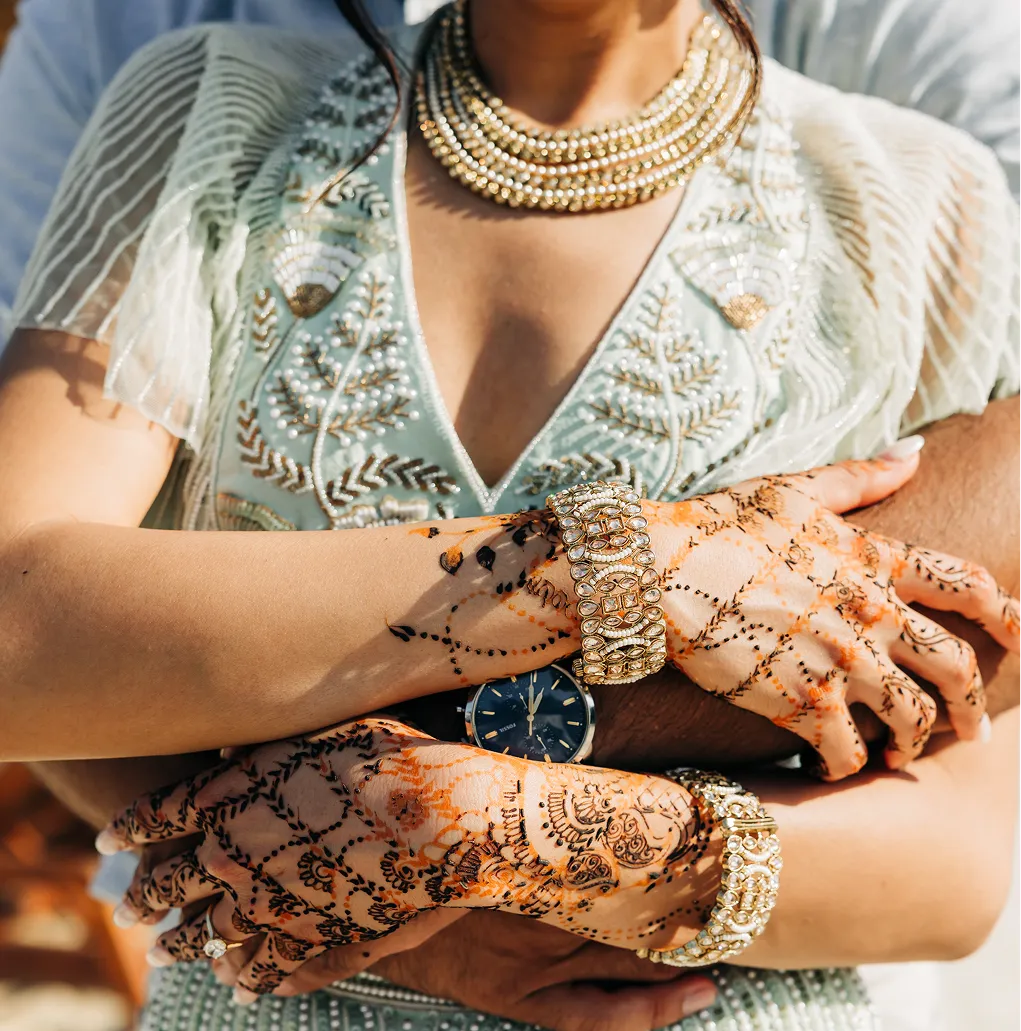
Day One — Mehendi and Welcome The ideal format begins with a Mehendi function at the Marina Garden or the Skyview rooms, depending on guest count. Afternoon light in Dubai is extraordinary for photography.
Day Two — Sangeet The Sangeet is where the evening comes alive. The Al Falak Ballroom or the Marina Garden (for a summer-breeze coastal version) works beautifully. Bollywood performances, family dance routines and live music are standard at Indian Sangeet nights. Burj Al Arab’s AV infrastructure is hotel-grade and can support high-quality production.
Day Three — The Wedding The main ceremony — Hindu, Sikh, Muslim, or interfaith — takes place in the Al Falak Ballroom, with the ceremony space configured in the morning and transformed for the reception dinner in the evening. A baraat procession up the Burj’s iconic staircase is one of the most photographed moments our clients have captured. The reception dinner, with bespoke Indian-influenced menus, culminates the celebration.
Day Four — Farewell Brunch Burj Al Arab’s restaurants are award-winning, and a farewell brunch at Al Muntaha, the Michelin-starred restaurant on the 27th floor with panoramic Gulf views, is the ideal final act for a wedding weekend that guests will discuss for years.
Practical Planning Checklist: Weddings at Burj Al Arab
Timeline. Begin planning 12 to 18 months in advance for peak season (October to April). 9 months minimum for off-peak.
Budget. Factor in venue hire, per-guest dining, suite block accommodation, décor (the hotel has preferred florists but allows approved external decorators), entertainment, photography and videography, transportation, and planner fees. A complete Indian wedding across 3 to 4 functions at Burj Al Arab typically requires a total event budget of AED 800,000 to AED 2.5 million depending on guest count and production level.
Legal. Review UAE marriage law requirements for foreign nationals. Visit the UAE Government portal for current guidance.
Visa logistics. Indian citizens travelling to Dubai can apply for a UAE tourist visa via the UAE GDRFA portal or through Emirates or flydubai at the time of flight booking. For groups, your planner should coordinate visa assistance.
Photography. Ensure your photography and videography team has prior experience shooting in luxury Dubai hotel environments. Drone permits for helipad and rooftop shots must be arranged in advance through the hotel.
Health and beauty. The Talise Spa at Burj Al Arab offers bespoke pre-wedding wellness programs, including 24-karat facials, couples’ treatments, and bridal beauty rituals that can be incorporated into the wedding weekend.
About Blissful Plans: Indian Luxury Wedding Specialists in Dubai
The team at Blissful Plans brings deep, firsthand expertise to super-luxury Indian weddings at Dubai’s most iconic venues. We do not simply coordinate venues — we translate the full complexity of Indian wedding traditions, family dynamics, multi-function formats and the uncompromising quality expectations that come with weddings at this level, into seamless, breathtaking celebrations.
Our experience planning Indian weddings at both Burj Al Arab and Atlantis The Palm means we carry vendor relationships, venue knowledge, and on-the-ground logistics capability that generic destination wedding planners cannot replicate. We understand the difference between a Punjabi Anand Karaj and a South Indian Brahmin ceremony, between a 200-person intimate gathering and a 500-person grand celebration. We know which Dubai florists can do justice to a marigold and mogra aesthetic, which Pandits are familiar with full Vedic rituals in a hotel setting and how to negotiate the fine print of a Burj Al Arab event contract in a family’s favour.
If you are considering a wedding in Burj Al Arab, whether as a standalone venue or as part of a wider Dubai wedding weekend, we would love to speak with you.